
AI Defense
Qualytrix helps organizations address the expanding security challenges of AI adoption through structured assessment, architecture, and remediation engagements. As AI agents, coding tools, connected workflows, and autonomous platforms enter business operations, they can create new paths to data, identities, tools, and systems that traditional security controls may not fully see or govern.
Our Secure AI services are designed to evaluate AI environments and help strengthen controls across agent identity, data exposure, tool access, workflow security, model risk, and governance. We help organizations identify shadow AI, prompt injection, unsafe MCP and tool connections, over permissioned agents, AI software supply chain exposure, and autonomous actions that can compound at machine speed. Each project provides visibility into AI risk, prioritized findings, and a practical roadmap for stronger controls. By combining technical assessment with security architecture guidance, Qualytrix helps organizations adopt AI with greater confidence while supporting accountability, resilience, and regulatory alignment.

AI Defense & Governance Services
Strengthening AI operations through structured assessment, resilience, governance, and optimization engagements
Agentic AI & AI Endpoint Exposure Management
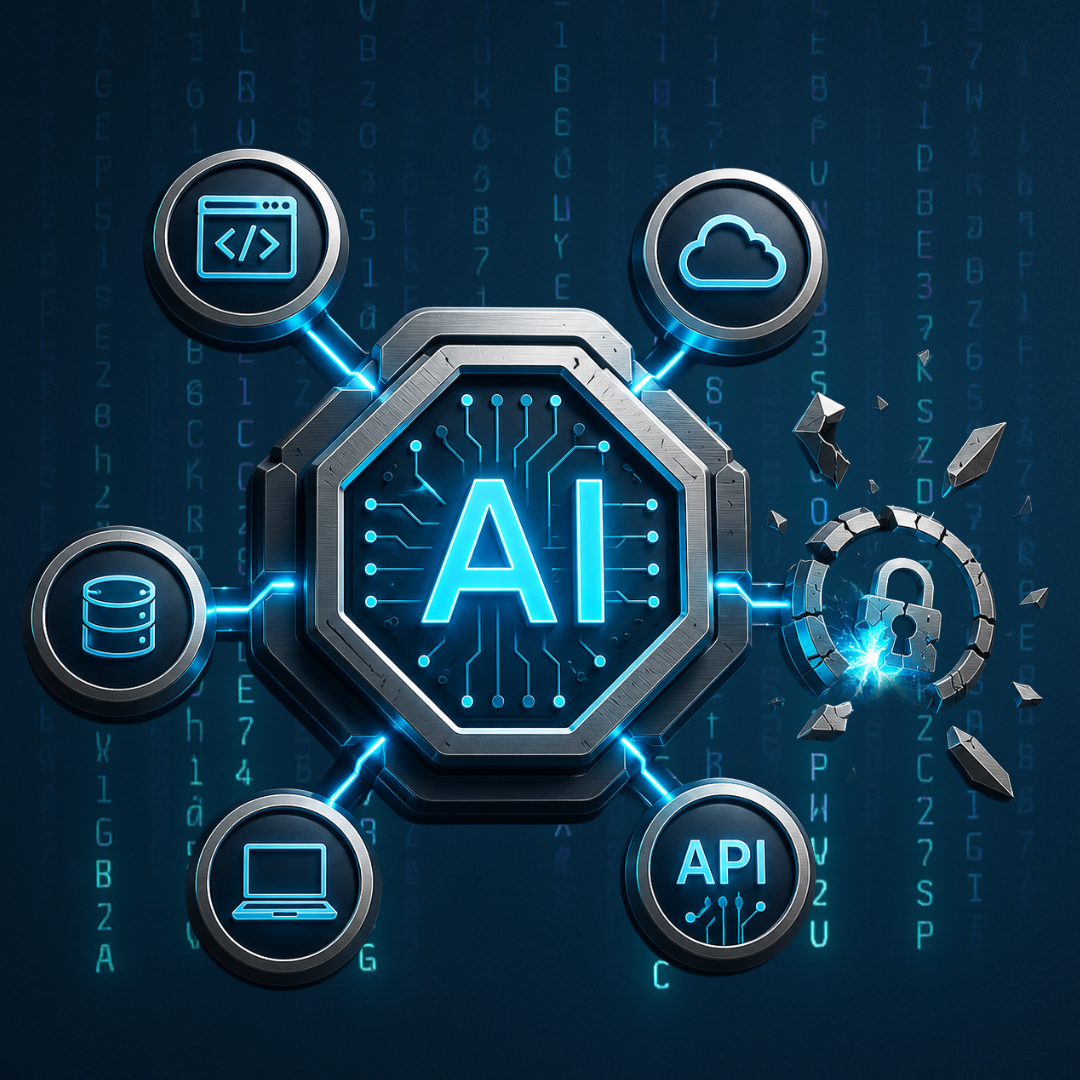
Qualytrix helps organizations gain visibility into AI agents, coding assistants, browser extensions, MCP servers, plugins, skills, packages, and local AI tools operating across enterprise endpoints. We identify unmanaged AI activity, risky software components, unapproved tool connections, exposed credentials, and agent workflows that may operate with excessive authority. Our engagements examine what AI tools and agents are present, what identities and permissions they use, what data and systems they can reach, and where actions may occur without adequate oversight. We help define practical controls for discovery, policy enforcement, least privilege, secure tool access, approval points, monitoring, and remediation. The result is a prioritized view of AI related endpoint and agent exposure with a practical roadmap for reducing risk while supporting responsible adoption.
AI Resilience & Defense
Our resilience engagements help organizations strengthen protections against AI manipulation, intellectual property theft, and operational disruption. We implement layered security measures for model integrity, training data, AI assets, and secrets while establishing governance for continuous oversight. Defense strategies address indirect prompt injection, untrusted skills and plugins, MCP and tool connections, and autonomous action chains that can extend beyond intended tasks. Supply chain measures help secure third party models, packages, and external dependencies before they introduce risk into AI environments. We support deployment of practical controls for secure tool access, action boundaries, monitoring, and response. The result is stronger AI resilience that helps reduce exposure to model theft, data poisoning, tool misuse, and adversarial manipulation.

Agentic AI Governance
As organizations deploy autonomous AI agents capable of planning and executing complex workflows, new governance challenges emerge. Our engagements establish frameworks for controlling autonomous operations while maintaining business agility. We define decision boundaries, assign unique agent identities, apply least privilege, authorize tool access, and implement approval gates for sensitive actions. Security controls monitor agent behavior, validate outputs, log actions, and help ensure operations remain within approved parameters. Compliance considerations address requirements for automated decision making and algorithmic accountability. Organizations gain auditability through action logging, performance monitoring, and risk indicators. This structured approach supports productive automation while maintaining control, accountability, and responsible adoption of advanced AI capabilities.
AI Resilience & Threat Validation
We help organizations validate whether AI controls can withstand realistic threats before those threats create business impact. Engagements test how AI agents, models, tools, data sources, identities, and workflows respond to prompt injection, unsafe tool use, exposed credentials, excessive permissions, supply chain compromise, and autonomous action chains. We examine defensive depth across the AI environment, including access boundaries, approval gates, monitoring, incident response, and recovery paths. Scenario based validation helps reveal where controls may fail under realistic conditions and where compensating measures can reduce exposure. The result is a clearer view of resilience, stronger confidence in control effectiveness, and practical direction for improving the security of AI enabled operations.
Implementation Process
A structured approach for securing AI environments through assessment, design, deployment, and optimization.
Discovery & Assessment Phase
The Discovery & Assessment phase establishes visibility into the organization’s AI landscape and the exposure created by connected agents, tools, and data. The engagement begins with stakeholder discussions to understand AI adoption priorities, business use cases, and risk tolerance. We inventory approved and unmanaged AI usage, including agents, coding assistants, browser extensions, MCP servers, plugins, skills, packages, and local AI tools. We examine agent identities, permissions, data access, tool connections, and workflow paths to identify where authority, credentials, or sensitive information may be exposed. Current controls are reviewed against prompt injection, unsafe tool use, software supply chain risk, excessive permissions, and autonomous actions. The assessment provides a prioritized roadmap for improving visibility, governance, and control design.
Key Activities:
- Stakeholder sessions on AI strategy, use cases, and risk tolerance
- AI inventory and shadow AI discovery
- Agent, tool, MCP, plugin, and endpoint exposure review
- Identity, permission, data access, and credential path analysis
- Control evaluation for prompt injection, unsafe tool use, and supply chain risk
- Prioritized roadmap for governance, control design, and remediation
Deliverables:
Architecture & Design Phase
The Architecture & Design phase translates assessment findings into a practical security design for AI agents, tools, data, and connected workflows. This stage establishes guardrails that support AI adoption without granting unnecessary authority or creating unmanaged exposure. We design least privilege access models, environment separation, approved tool connections, data access boundaries, approval points for sensitive actions, and monitoring requirements for agent activity. Governance structures define ownership, decision boundaries, escalation paths, and accountability across AI operations. Technical designs also address how controls connect with existing identity, endpoint, data protection, monitoring, and incident response capabilities. The result is a clear architecture for deploying AI with stronger control, visibility, and operational resilience.
Key Activities:
- Security architecture design for AI agents, tools, data, and workflows
- Least privilege identity and access design for agents and connected tools
- Environment separation and data access boundary definition
- Approval gates and action control design for sensitive operations
- Monitoring, logging, and investigation requirements for agent activity
- Governance framework, ownership model, and escalation path design
Deliverables:
Deployment & Integration Phase
The Deployment & Integration phase supports implementation of approved AI security controls and governance measures through structured rollout, integration, validation, and documentation. We help coordinate deployment of identity controls, access boundaries, approval points, monitoring capabilities, and safeguards for AI agents, tools, data, and connected workflows. Integration activities align AI security controls with existing identity, endpoint, data protection, monitoring, and incident response capabilities. Validation activities confirm that configured controls operate as intended within the agreed scope, while documentation captures implemented configurations and operational responsibilities. Knowledge transfer sessions help prepare internal teams for ongoing administration, monitoring, and escalation. Progress checkpoints provide visibility into implementation status and remaining actions.
Key Activities:
- Support implementation of approved AI security controls
- Coordinate integration with security infrastructure and workflows
- Validate configured access, monitoring, and action controls
- Document deployed configurations and operating procedures
- Support knowledge transfer and team enablement
- Track implementation progress and open actions
Deliverables:
Optimization & Advisory Phase
The Optimization & Advisory phase is available through defined engagements that help organizations maintain and improve AI security controls as technologies, threats, and business use cases evolve. These projects focus on recurring threat validation, control testing, governance updates, remediation tracking, and reviews of new agents, tools, data connections, and workflows. We help organizations validate that safeguards continue to operate as intended, assess changes that may introduce new exposure, and update governance and operating practices when needed. This approach provides practical support without requiring a continuous service commitment, helping teams maintain visibility, accountability, and resilience as AI environments change.
Available Engagements:
- Recurring AI threat validation and control testing
- Governance framework and policy updates
- Remediation tracking and control review
- New agent, tool, and workflow security reviews
- Regulatory and compliance readiness reviews
- Strategic AI security planning workshops
Deliverables:
Secure AI Before It Becomes Unmanaged Exposure
Qualytrix helps organizations move from AI exposure visibility to practical controls that strengthen resilience, governance, and responsible adoption.